 by
by Land availability determines where cricket grounds can be built. Urban areas face severe space constraints. Rural locations offer more flexible options.
Cricket ground dimensions translate directly into land requirements. The playing field alone needs a minimum of 5.5 acres. Complete facilities require 6 to 7 acres total.
Financial implications follow land size needs. Larger land parcels cost more. Urban property prices make cricket ground construction expensive.
Construction planning begins with land area calculations. The 150 x 150 meter minimum creates a specific footprint. Additional infrastructure expands total requirements.
Spectator seating occupies a significant space beyond the playing area. Light installation for day-night matches needs a separate allocation. These components add 0.5 to 1.5 acres.
Ground shape flexibility helps maximize available land. Perfect circles, ovals, and rounded rectangles accommodate different parcels. Irregular shapes with smooth boundaries work within constraints.
Cricket ground size in acres determines venue feasibility. Projects below 6 acres struggle to meet complete requirements. Optimal sites provide 7+ acres for full facility development.
Domestic cricket grounds receive regulatory flexibility. Smaller venues can host matches within certain limits. International grounds face stricter dimensional standards.
Cricket Ground Dimensions
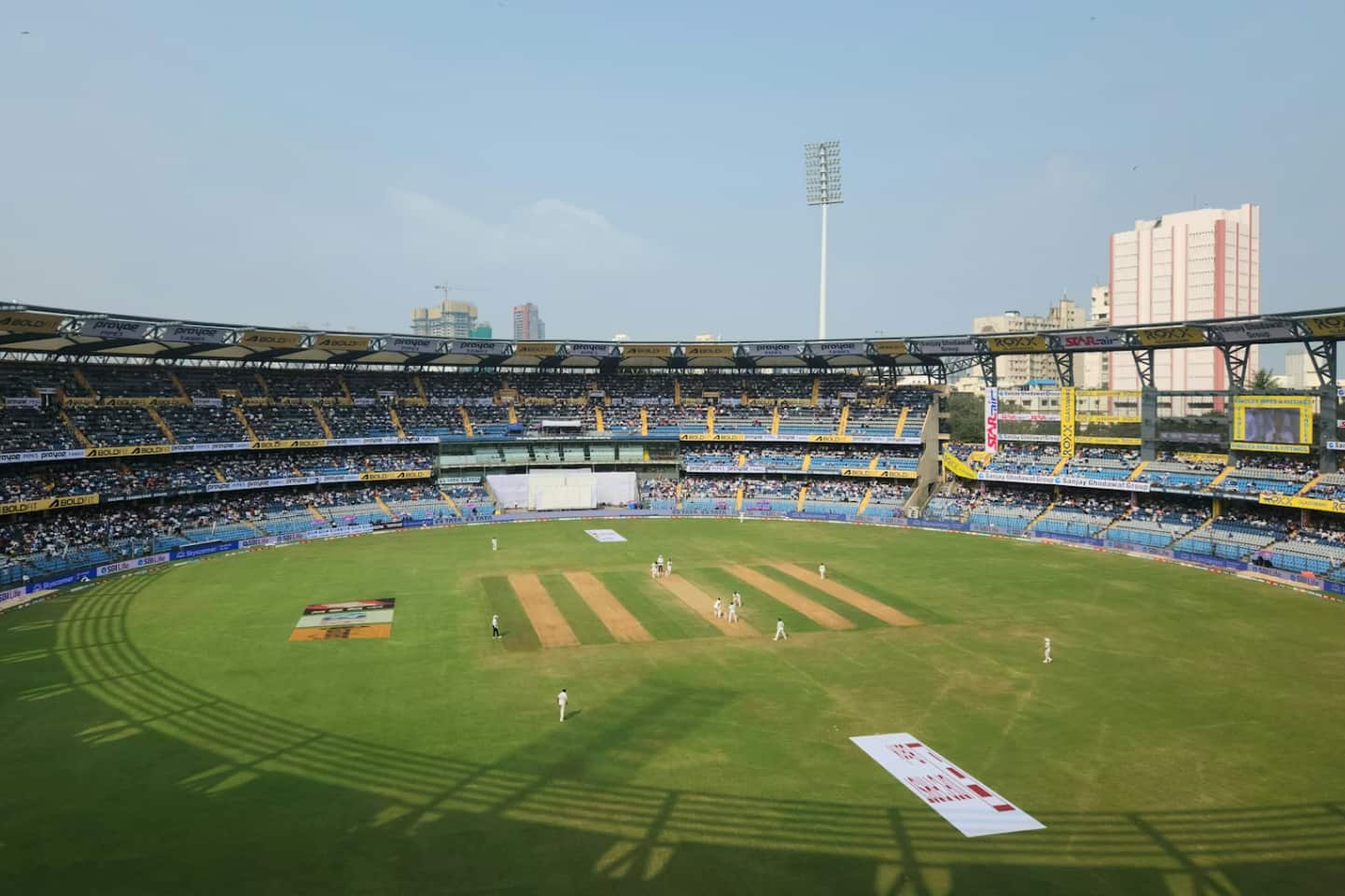
This analysis examines land area requirements for cricket ground construction.
Numbers cover minimum playing field needs, complete facility requirements, and infrastructure allocations. Data comes from cricket venue specifications.
Basic Land Area Requirements for Cricket Playing Field
Minimum land area measures 150 x 150 square meters. This calculation provides 22,500 square meters total. Converting to acres equals 5.5 acres exactly.
The square measurement accommodates an oval playing field. Cricket grounds use various shapes within this footprint. Corner areas outside the oval provide buffer zones.
This 5.5-acre calculation covers the playing field only. No spectator facilities included. No lighting infrastructure counted. Pure playing surface defines this minimum.
Cricket Ground diameter ranges from 137 to 150 meters for the outfield. This fits within the 150-meter square perimeter. The circular/oval field sits inside a square boundary.
Men’s cricket requires a 450 to 500 feet diameter. Converting to meters gives 137 to 152 meters. Maximum dimensions approach the 150-meter square limit.
Minimum Land Area Specifications
| Measurement Type | Square Meters | Square Feet | Acres | Hectares | Purpose |
|---|---|---|---|---|---|
| Playing Field Base | 22,500 | 242,190 | 5.5 | 2.25 | Grass playing surface only |
| Dimension (Side Length) | 150 x 150m | 492 x 492 ft | N/A | N/A | Square footprint |
The 22,500 square meter calculation uses simple multiplication. 150 meters × 150 meters = 22,500 square meters. Standard area formula applies.
Conversion to acres is divided by 4,047 square meters per acre. Calculation: 22,500 ÷ 4,047 = 5.56 acres. Rounded to 5.5 acres standard.
Square footage reaches 242,190 square feet. This converts from square meters using the 10.764 factor. Alternative calculation uses 492 × 492 feet.
This minimum supports the playing field exclusively. Cricket pitch at center measures 22 yards (20.12 meters).
The infield circle has a 27.4-meter radius. The outfield extends to the boundary rope.
Complete Facility Land Requirements Beyond Playing Field
Total land requirement increases to 6-7 acres. This includes all cricket ground components. The playing field plus the infrastructure defines a complete facility.
An additional 0.5 to 1.5 acres accommodates non-playing infrastructure. Spectator seating areas occupy substantial space. Light towers and installations need placement zones.
The reference material specifically states that seating spaces must be included. Day-night match lighting requires a separate area. These elements cannot occupy the playing field space.
Total land calculation adds infrastructure to the playing field base.
- Minimum: 5.5 acres + 0.5 acres = 6 acres.
- Maximum: 5.5 acres + 1.5 acres = 7 acres.
Complete Facility Land Area Breakdown
| Facility Component | Minimum Area (Acres) | Maximum Area (Acres) | Square Meters (Min) | Square Meters (Max) | Percentage of Total |
|---|---|---|---|---|---|
| Playing Field | 5.5 | 5.5 | 22,500 | 22,500 | 79-92% |
| Infrastructure | 0.5 | 1.5 | 2,025 | 6,075 | 8-21% |
| Total Land | 6.0 | 7.0 | 24,525 | 28,575 | 100% |
The playing field consistently measures 5.5 acres. This component never varies. Infrastructure space shows flexibility from 0.5 to 1.5 acres.
At a minimum 6-acre facility, the playing field represents 92% of the total. Infrastructure occupies only 8%. Space-constrained venues operate at these minimums.
At a maximum 7-acre facility, the playing field drops to 79% of the total. Infrastructure expands to 21%. Premium venues provide expanded spectator and facility areas.
The 1-acre difference between minimum and maximum facilities is significant. This represents 4,047 square meters of additional infrastructure space. Seating capacity and amenities scale with this allocation.
Spectator Seating Space Requirements
Spectator areas require substantial land allocation. Reference material mandates seating spaces alongside the playing field. The 0.5 to 1.5 additional acres primarily accommodate seating.
World’s largest cricket stadium provides context. Narendra Modi Cricket Stadium in Ahmedabad holds 132,000+ spectators. This massive capacity requires extensive seating infrastructure.
Stadium seating arrangements vary significantly. Simple grounds use minimal seating. Major international venues build extensive stands. Seating type affects space requirements dramatically.
Temporary seating requires less permanent space. Bleachers can be assembled for major matches. Permanent concrete stands occupy a fixed land area.
Lighting Installation Space Needs
Day-night cricket matches require artificial lighting. Light towers must be positioned around the ground. These installations need dedicated space allocation.
Light towers cannot interfere with the playing area. Placement outside the boundary rope is mandatory. Adequate distance from the field ensures player safety.
Power infrastructure supports lighting systems. Electrical equipment requires housing. Cable routing needs planning space. Total lighting infrastructure consumes a substantial area.
Four to six light towers typically circle a cricket ground. Each tower needs foundation space. Access paths to towers require additional area. Maintenance zones surround each installation.
Seating and Lighting Infrastructure Space Allocation
| Infrastructure Type | Space Requirement | Typical Allocation | Placement Constraints | Maintenance Access |
|---|---|---|---|---|
| Spectator Seating | 0.3-1.0 acres | Primary infrastructure | Beyond the boundary rope | Public pathways |
| Light Towers | 0.1-0.3 acres | 4-6 towers + equipment | Around the ground perimeter | Service roads |
| Combined Infrastructure | 0.5-1.5 acres | Non-playing total | Outside the playing field | Planned access |
Spectator seating consumes 0.3 to 1.0 acres, typically. Major stadiums exceed this range. The 132,000-capacity stadium represents extreme seating allocation.
Light towers with equipment need 0.1 to 0.3 acres total. This includes foundation zones. Power distribution equipment adds space requirements. Access roads to towers included.
Combined infrastructure ranges from 0.5 to 1.5 acres, as stated in reference. Distribution between seating and lighting varies by venue priorities. Major venues emphasize spectator capacity.
All infrastructure must be positioned outside the playing field boundary. The 5.5-acre playing field remains intact. Infrastructure surrounds this core area.
International vs Domestic Ground Size Allowances
International cricket ground dimensions face stricter requirements. ICC regulations establish a maximum boundary distance. The 90-meter limit from the pitch center applies to international matches.
Domestic cricket receives relaxed standards. Smaller grounds can host domestic competitions. Reference material confirms that smaller grounds are permitted domestically.
Minimum standards still apply to domestic venues. The playing field must be functional. Safety requirements remain mandatory. Only dimensional restrictions relax.
This flexibility allows cricket development in space-limited regions. Communities with restricted land can build smaller grounds. Domestic cricket operates on these reduced-size venues.
International venues must meet full ICC specifications. The 90-meter boundary limit creates an effective floor size. Maximum boundary distance defines minimum ground dimensions.
International vs Domestic Size Standards
| Match Type | Boundary Limit | Ground Size Flexibility | Land Area Requirement | ICC Approval | Typical Diameter |
|---|---|---|---|---|---|
| International | 90m maximum | Strict compliance | 6-7 acres full size | Required | 450-500 feet |
| Domestic | Below 90m OK | Relaxed standards | 5.5+ acres minimum | National board | Variable |
| Difference | No strict minimum | More flexible | Can be smaller | Different authority | Can vary widely |
International matches enforce the 90-meter maximum boundary. No flexibility exists for this standard. All international venues comply strictly.
Domestic matches permit boundaries under 90 meters. Smaller grounds become viable. Land area requirements potentially reduce. However, minimum standards apply.
The reference notes “smaller grounds are permitted for domestic matches as long as they meet the minimum standards.” This confirms flexibility while maintaining baseline requirements.
National cricket boards approve domestic venues. ICC approval is unnecessary for domestic-only grounds. This decentralized approval enables local development.
Land Area Calculation Methods for Cricket Ground Planning
The 150 x 150 meter requirement uses square calculation. Simple multiplication determines the total area. 150 × 150 = 22,500 square meters.
The alternative approach calculates from the diameter. If the ground diameter is 150 meters, the radius equals 75 meters.
- Circular area formula: π × radius².
- Calculation: 3.14159 × 75² = 17,671 square meters.
A square boundary accommodates a larger area than a circular calculation.
The 22,500 square meter square exceeds the 17,671 square meter circle by 27%. This provides buffer space.
Corner areas outside the oval playing field serve as buffer zones.
Equipment storage, warm-up areas, and emergency access utilize these spaces. The square boundary makes practical sense.
Area Calculation
| Shape | Dimension | Formula | Area (Sq M) | Area (Acres) | Efficiency |
|---|---|---|---|---|---|
| Square (Required) | 150m side | Side × Side | 22,500 | 5.5 | 100% land use |
| Circle (Max Fit) | 150m diameter | π × r² | 17,671 | 4.36 | 78.5% playing area |
| Oval (Typical) | 140m × 160m | Ellipse formula | ~17,593 | 4.35 | Variable |
Square calculation provides a conservative land requirement. The 22,500 square meters ensures adequate space. All ground shapes fit within this footprint.
Circular calculation shows the maximum playing area possible. The 17,671 square meters represents the theoretical maximum. However, buffer space remains necessary.
Oval grounds are most common. Typical dimensions might be 140m × 160m axes. Ellipse area calculation applies. Most cricket grounds use an oval configuration.
The difference between the square boundary and the circular playing area is 4,829 square meters. This represents 21.5% buffer space. Corner areas serve practical purposes.
Men’s vs Women’s Cricket Land Requirements
Men’s cricket uses a 450 to 500 feet diameter. Converting to meters gives 137 to 152 meters. This fits within 150-meter square boundary requirement.
Women’s cricket employs a 360 to 429 feet diameter. Metric conversion shows 110 to 131 meters. Substantially smaller than men’s cricket dimensions.
Women’s grounds theoretically need less land. A 131-meter diameter circle requires a smaller square boundary. However, the 150 x 150 meter minimum remains standard.
Both men’s and women’s cricket use the same 5.5-acre minimum in practice. Infrastructure requirements remain similar. Seating, lighting, and facilities match between categories.
Ground Diameter and Land Efficiency
Cricket Ground diameter directly affects land utilization efficiency. Smaller diameters waste less corner space. Larger diameters approach square boundary limits.
Men’s maximum 500 feet (152 meters) nearly fills a 150-meter square. Only 2 meters of buffer remains on each edge. Land efficiency maximizes at 95%+.
Women’s maximum 429 feet (131 meters) leaves more buffer. Approximately 19 meters of buffer exists. Land efficiency drops to around 76% for circular calculation.
The fixed 150 x 150 square meters means women’s cricket has excess buffer space. This could accommodate larger spectator areas. Or grounds could be built on slightly smaller parcels.
However, the 5.5-acre standard maintains consistency. Infrastructure needs remain similar regardless. The playing field might be smaller, but the total facility requirements match.
Urban vs Rural Venue Construction Challenges
Urban areas face land acquisition challenges. The 6-7 acre requirement is substantial. Urban property costs per acre far exceed rural prices.
City centers rarely have available 7-acre parcels. Cricket grounds in cities often predate urban development. Historical grounds are maintained despite surrounding urbanization.
Rural areas offer abundant land options. The 6-7 acre requirement poses less challenge. Lower land costs make rural venue construction economically viable.
However, rural locations lack infrastructure. Roads, utilities, and accessibility require investment. Urban grounds benefit from existing city infrastructure.
The reference notes cricket allows flexibility to accommodate local traditions. This extends to land availability. Grounds adapt to available space within regulatory limits.
Land Cost Implications for Cricket Ground Development
The cricket ground size in acres directly determines the land acquisition cost. Urban land costs $500,000 to $5,000,000+ per acre, depending on location.
Seven-acre ground in an expensive urban area could require $3.5 million to $35 million for land alone. Construction costs add a substantial additional investment. Total project costs escalate rapidly.
Rural land costs $5,000 to $50,000 per acre, typically. Seven-acre rural ground might cost $35,000 to $350,000 for land. This makes rural development economically feasible.
The 1-acre difference between 6 and 7-acre facilities saves a high cost. Urban developers minimize to 6 acres where possible. Rural developers often exceed 7 acres.
Professional international stadiums invest heavily. The Narendra Modi Stadium represents a massive financial commitment. Land acquisition, construction, and infrastructure total hundreds of millions.
Regulatory Compliance and Approval Process
ICC provides international ground guidelines. The 90-meter boundary maximum applies strictly. Adequate safety distances between boundaries and obstacles are required.
National cricket boards govern domestic venue standards. They interpret ICC guidelines for local application. Approval process varies by country.
Ground measurement verification precedes approval. Surveyors document all dimensions. Boundary distances, infield circles, and pitch length all confirmed.
Safety inspections examine buffer zones. The distance between the boundary rope and obstacles is measured. Spectator areas evaluated for player safety. Lighting adequacy assessed.
The approval process for international venue status takes considerable time. Documentation, inspection, and verification steps multiply. Domestic-only venues face simpler approval.
Infrastructure Planning Beyond Land Area
The 6-7 acre total includes basic requirements only. Premium venues exceed these minimums. Practice facilities require additional land.
Full cricket complexes include multiple practice pitches. Net facilities for training need a dedicated space. Team facilities, media centers, and VIP areas expand the footprint.
Parking accommodates thousands of vehicles at major venues. Large stadiums need substantial parking areas. This could double or triple total land requirements.
The reference focuses on the playing facility alone. Complete cricket stadiums occupy 10-20+ acres commonly. The 132,000-capacity stadium requires an extensive total footprint.
Statistical Summary of Cricket Ground Land Requirements
Cricket ground dimensions translate to specific land area needs. Minimum playing field requires 150 x 150 square meters. This equals 22,500 square meters or 5.5 acres.
A complete cricket facility needs 6 to 7 acres total. An additional 0.5 to 1.5 acres accommodate spectator seating and lighting infrastructure. The playing field represents 79-92% of the total area, depending on the configuration.
International grounds must comply with ICC regulations strictly. The 90-meter maximum boundary distance from the pitch center applies. Domestic grounds receive flexibility with smaller dimensions permitted.
Men’s cricket uses a 450-500 feet diameter (137-152 meters). Women’s cricket employs a 360-429 feet diameter (110-131 meters). Both typically use the same 5.5-acre minimum playing field standard.
Urban venue development faces space and cost constraints. Seven acres in city centers require significant investment. Rural locations offer more feasible development options with lower land costs.
Square boundary calculation provides 22,500 square meters. The oval playing field within this square uses approximately 17,500 square meters.
Buffer space of 5,000 square meters (22%) serves practical purposes for equipment, access, and safety zones around cricket ground dimensions requirements.
Also Check:


