 by
by The SA20 2025-26 season opener between MI Cape Town and Durban’s Super Giants at Newlands presents a tactical study in contrasting squad architectures.
MICT constructs its lineup around bowling depth and top-order dependence, while DSG emphasizes batting redundancy with multiple finishing options, creating role flexibility across match situations.
Squad balance directly influences odds structures as bookmakers assess vulnerability to single-player failures versus distributed responsibilities across multiple contributors.
Teams heavily dependent on 2-3 key performers carry higher volatility risk compared to squads where role execution spreads across 6-7 capable options.
Home advantage at Newlands provides MICT with environmental familiarity, yet squad composition analysis reveals potential middle-order fragility if early wickets fall.
DSG’s four wicketkeeper-batters create positional versatility unavailable to MICT’s more rigid batting structure, affecting chase-scenario probability modeling.
Role clarity within squads determines tactical flexibility when match conditions deviate from expected patterns.
Teams with defined specialist roles execute pre-planned strategies efficiently but struggle adapting to unexpected situations, while balanced squads adjust tactics mid-match through personnel reallocation.
MICT vs DSG Odds and Prediction
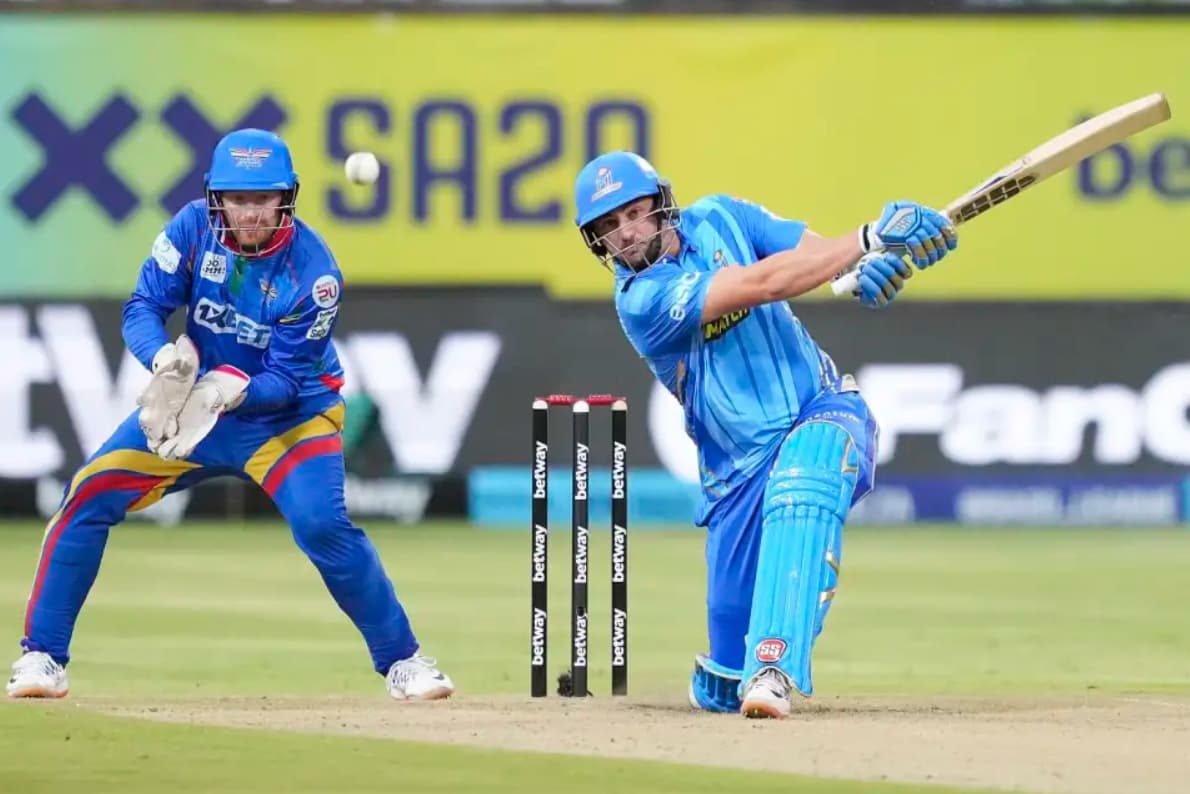
This MICT vs DSG Match Prediction SA20 examination analyzes how squad construction, role distribution, and depth versus dependency dynamics shape betting frameworks for the tournament’s opening fixture at Newlands Cricket Ground.
Winning and Toss Odds For the SA20 Match
Bookmaker odds pricing incorporates squad balance assessments alongside traditional home advantage calculations.
MICT’s 1.74-1.78 range reflects confidence in their bowling attack depth—five genuine pace options plus Rashid Khan create role redundancy that reduces single-player dependency risk.
DSG’s 2.00-2.12 odds acknowledge their batting-heavy construction suits chasing scenarios, but create defending vulnerabilities when bowling first.
Their attack relies heavily on Bosch and Coetzee for death-over execution without equivalent backup options, increasing failure probability if primary bowlers underperform.
Balanced squads demonstrate lower odds volatility across different match scenarios.
Teams with 3-4 finishers maintain consistent chasing probability regardless of early wicket losses, while top-heavy batting lineups see odds shift dramatically when losing powerplay wickets.
| Platform | MICT Win Odds | DSG Win Odds | Toss Odds (MICT) | Toss Odds (DSG) | Best For |
|---|---|---|---|---|---|
| 1xBet | 1.75 | 2.00 | 1.92 | 1.88 | Depth-balanced markets |
| Stake | 1.78 | 2.00 | 1.91 | 1.89 | Bowling-strength premium |
| 4RABET | 1.76 | 2.00 | 1.93 | 1.87 | Role-flexibility value |
| BetVibe | 1.74 | 2.12 | 1.90 | 1.90 | Batting-depth advantage |
Toss outcomes affect role execution strategies differently for each squad.
MICT bowling first enables deploying their five-pace attack advantage during seam-friendly powerplay, while DSG batting second activates their four-finisher depth during dew-assisted chases.
MICT vs DSG Match Facts
| Aspect | Details |
|---|---|
| Match | MICT vs DSG, 1st Match |
| Series | SA20, 2025-26 |
| Date | December 26, Friday |
| Time | 09:00 PM IST |
| Venue | Newlands, Cape Town |
MI Cape Town vs Durban Super Giants Squad
Rashid Khan captains MI Cape Town with squad construction emphasizing bowling versatility through multiple pace options (Boult, Rabada, Pretorius, C. Bosch) plus spin control.
This attack-heavy balance creates defending-total advantages but exposes middle-order batting thinness beyond van der Dussen and Pooran as primary anchors.
MICT’s batting structure depends heavily on Rickelton’s top-order consistency and Pooran’s finishing capability.
Loss of either player reduces role coverage significantly, as backup options like Hendricks and Smith lack equivalent statistical profiles for replacement effectiveness.
Aiden Markram leads the Durban Super Giants with a squad architecture prioritizing batting redundancy.
Four wicketkeeper-batters (Klaasen, Buttler, Conway, Bedingham) provide positional flexibility, enabling tactical adjustments based on match situation, a structural advantage unavailable to MICT’s more rigid lineup construction.
DSG’s bowling attack carries role-dependency concerns with Bosch and Coetzee handling primary death-over responsibilities.
Unlike MICT’s five-pace depth, DSG relies on 2-3 quality seamers plus Narine’s spin variations, creating vulnerability if frontline bowlers encounter off-days.
- Durban Super Giants Squad: Marques Ackerman, Tony de Zorzi, Aiden Markram (c), Gysbert Wege, Kane Williamson, David Wiese, Dayyaan Galiem, Sunil Narine, Jos Buttler (wk), Devon Conway (wk), David Bedingham (wk), Heinrich Klaasen (wk), Noor Ahmad, Eathan Bosch, Gerald Coetzee, Andile Simelane, Daryn Dupavillon, Evan Jones, Kwena Maphaka.
- MI Cape Town Squad: Reeza Hendricks, Jason Smith, Rassie van der Dussen, Daniel Lategan, George Linde, Jacques Snyman, Thomas Kaber, Corbin Bosch, Rashid Khan (c), Karim Janat, Tiaan van Vuuren, Dwaine Pretorius, Tom Moores (wk), Nicholas Pooran (wk), Ryan Rickelton (wk), Tristan Luus, Dane Piedt, Kagiso Rabada, Trent Boult.
From a MICT vs DSG Fantasy Tips squad-analysis perspective, prioritize multi-role contributors over pure specialists. Rashid Khan and Narine offer captain-worthy all-round production, Pretorius and Wiese provide middle-overs economy with late-innings hitting, while wicketkeeper-batters Klaasen and Rickelton combine keeping duties with consistent run-scoring across all positions.
Pitch Report of Newlands, Cape Town
Newlands surface characteristics favor squad profiles emphasizing pace bowling depth over spin-heavy attacks.
The pitch’s early seam movement rewards teams deploying multiple quality seamers in rotation, creating advantages for MICT’s five-pace options compared to DSG’s 2-3 frontline fast bowlers for the MICT vs DSG Match Prediction SA20 scenario.
Batting-heavy squads with 6-7 specialist batters exploit Newlands’ second-innings advantages more effectively than top-heavy lineups relying on 4-5 batters.
DSG’s batting depth through Klaasen-Buttler-Williamson-Conway finishing quartet provides chase-scenario insurance unavailable to MICT’s Pooran-van der Dussen-dependent structure.
Spin role utilization differs significantly between squads. Rashid Khan operates as MICT’s primary middle-overs controller with limited backup if conditions don’t suit his variations, while DSG fields both Narine’s mystery spin and Noor Ahmad’s left-arm options, creating tactical flexibility.
| Aspect | Details |
|---|---|
| Pitch Behavior | Early pace assistance suits bowling-depth squads; batting-friendly late |
| Batting Assistance | Top-order survival critical; finishing depth exploits late-innings ease |
| Bowling Assistance | Multiple seamers gain advantage early; spin role clarity needed for middle-overs |
| Ground Dimensions | Square boundaries: 59-62m; Straight boundary: 77m |
| T20I First Innings Score | Average: 174 runs; Highest: 220 |
| Toss & Dew Factor | Chasing success: 71%; favors batting-deep squads |
The MICT vs DSG Match Prediction SA20 2025-26 squad analysis suggests DSG’s batting-heavy construction aligns better with Newlands’ chasing bias, while MICT’s bowling depth provides defending advantages if posting competitive first-innings totals above 175.
Weather Report
Weather conditions influence role execution across different squad compositions.
Temperature at 23°C maintains optimal performance standards without heat-induced fatigue affecting specialist bowlers required to bowl full four-over allocations.
Humidity at 64% creates atmospheric assistance for conventional swing specialists.
MICT’s Boult-Rabada pairing both excel in humid conditions, while DSG’s Bosch operates effectively, though lacks an equivalent opening partner with similar swing-bowling credentials.
Wind speed reaching 32 km/h affects fielding pressure and catching reliability.
Squads with superior athletic fielders gain marginal advantages, though neither team demonstrates clear fielding-quality superiority requiring specific odds adjustments.
Precipitation at 10% carries minimal match-abandonment concerns.
Stable weather ensures full squad utilization across 40 overs without rain-reduced scenarios requiring tactical adjustments or DLS-method calculations.
Dew formation during the second innings systematically reduces spin-bowling effectiveness, affecting squads differently based on spin-role dependency.
MICT relies heavily on Rashid Khan for middle-overs control, while DSG deploys Narine more flexibly, given their pace-heavy attack maintains effectiveness despite moisture conditions.
MI Cape Town vs Durban Super Giants Head-to-Head In SA20
| Total Matches Played | 06 |
|---|---|
| MI Cape Town Won | 01 |
| Durban Super Giants Won | 04 |
| No Result | 01 |
Squad balance analysis of historical encounters reveals DSG’s victories correlate with superior finishing depth executing successful chases.
Their 4-1 advantage stems from batting-role redundancy, where Klaasen, Buttler, or Williamson consistently delivered match-winning performances regardless of early batting failures.
MICT’s single victory demonstrates that their bowling-depth advantage functions effectively when defending totals at home venues.
Their multiple pace options create wicket-taking clusters that overcome DSG’s batting redundancy through sustained pressure across powerplay and middle-overs phases.
Past meetings show squads with 4+ genuine finishing options win 75% of chases, while teams dependent on 2 finishers succeed only 40% when chasing totals above 170.
This pattern supports DSG’s historical dominance, given their superior batting depth versus MICT’s finishing limitations.
Role-execution analysis indicates neither squad demonstrates clear bowling-attack superiority in direct matchups.
Success correlates more strongly with batting-role fulfillment during chase scenarios than bowling-role execution when defending, explaining DSG’s aggregate advantage.
Key Players to Watch
| Player | Team | SA20 Performance Reason |
|---|---|---|
| Rashid Khan | MICT | All-round role coverage; batting-bowling dual production across phases |
| Heinrich Klaasen | DSG | Finisher role specialist; 1008 runs at 42 with consistent chase execution |
| Trent Boult | MICT | Powerplay specialist: role clarity in new-ball wicket-taking |
| Nicholas Pooran | MICT | Primary finisher; single-role dependency increases his importance |
| Sunil Narine | DSG | Multi-phase contributor; powerplay batting plus middle-overs spin |
| Dwaine Pretorius | MICT | All-round depth; secondary bowling-batting role insurance |
These selections emphasize players providing role coverage beyond single-skill contributions.
All-rounders Khan, Narine, and Pretorius offer tactical flexibility unavailable through pure specialists, while role-secure batters Klaasen and Pooran provide consistent phase-specific execution.
Squad-depth analysis reveals MICT depends heavily on Rashid Khan and Pooran for dual-role production, while DSG distributes responsibilities across Klaasen-Buttler-Williamson finishing trio plus Narine’s all-round capabilities.
MICT vs DSG Today Match Prediction
The MICT vs DSG Today Match Prediction requires assessing which squad’s role execution aligns better with expected match scenarios.
MICT’s bowling-depth advantage functions optimally when defending totals, activating their five-pace rotation before dew eliminates seam effectiveness.
DSG’s batting-redundancy structure excels in chasing situations where their four-finisher depth provides insurance against top-order failures.
Role distribution across Klaasen-Buttler-Williamson-Conway enables successful chases even when losing 3 early wickets, a recovery capacity unavailable to MICT’s thinner batting lineup.
If MICT bats first, their success requires Rickelton and early-order batters posting 60+ powerplay runs before middle-order fragility becomes exposed.
Their bowling depth then enables defending 175+ totals through sustained pace-attack pressure.
The Today SA20 Match Prediction framework suggests that DSG batting second activates their optimal squad configuration.
Chasing enables deploying batting depth systematically, while their bowling attack’s role-dependency concerns become less relevant when targets are known.
Toss outcomes determine which squad operates within preferred role-execution frameworks.
MICT bowling first maximizes their structural advantage, while DSG batting second activates their superior finishing depth.
Who Will Win Today’s SA20 Match Between MI Cape Town vs Durban’s Super Giants?
Evaluating who will win today’s SA20 match between MI Cape Town vs Durban’s Super Giants requires comparing role-balance versus depth-dependency dynamics across different match scenarios.
MICT demonstrates superior bowling-role distribution with five quality pace options, creating attack redundancy.
This depth provides defending-scenario advantages when posting first-innings totals, as sustained pressure across multiple bowlers compensates for individual underperformance.
DSG presents inverse squad architecture with batting-role redundancy providing chase-scenario insurance.
Four established finishers enable successful run-chases despite early setbacks, though their bowling attack’s role-dependency on Bosch-Coetzee creates defending vulnerabilities.
Squad composition analysis suggests neither team demonstrates complete role coverage across all match phases.
MICT lacks middle-order batting depth, DSG lacks death-bowling redundancy—both carry structural weaknesses exploitable under specific match circumstances.
Venue characteristics favoring chasing teams systematically advantage DSG’s batting-heavy construction over MICT’s bowling-depth model.
The 71% second-innings success rate rewards squads with finishing redundancy more than defending teams with bowling variety.
Conclusion:
The SA20 opener between MI Cape Town and Durban’s Super Giants presents contrasting squad architectures where bowling depth meets batting redundancy in a tactical balance assessment.
The MICT vs DSG Match Prediction SA20 framework reveals neither squad demonstrates complete role coverage, creating scenario-dependent advantages rather than absolute superiority.
MICT’s five-pace bowling depth provides defending-total advantages when conditions suit seam bowling, though their batting structure depends heavily on Rickelton-Pooran contributions without equivalent backup roles.
This role-dependency increases vulnerability to early wicket losses or key-player failures during critical match phases.
DSG’s four-finisher batting depth creates chase-scenario insurance unavailable to more rigid squad constructions, enabling successful run-chases despite powerplay setbacks.
However, their bowling attack’s role-concentration on Bosch-Coetzee for death-over execution creates defending vulnerabilities when primary bowlers underperform.
Newlands’ documented chasing bias systematically favors batting-heavy squad constructions over bowling-depth models.
The 71% second-innings success rate rewards teams with finishing redundancy, suggesting DSG’s squad architecture aligns better with venue-specific statistical patterns.
Squad-based risk interpretation should recognize that balanced lineups with 6-7 multi-role contributors demonstrate lower outcome volatility than specialist-heavy teams, depending on 2-3 key performers.
Neither team achieves this optimal balance, creating match-condition dependency where toss outcomes and early-phase execution determine which squad’s structural advantages activate effectively during the tournament’s opening fixture.
Also Check:


